
Imam Al-Ghazali's Educational Philosophy: Timeless Wisdom for Modern Islamic Teaching
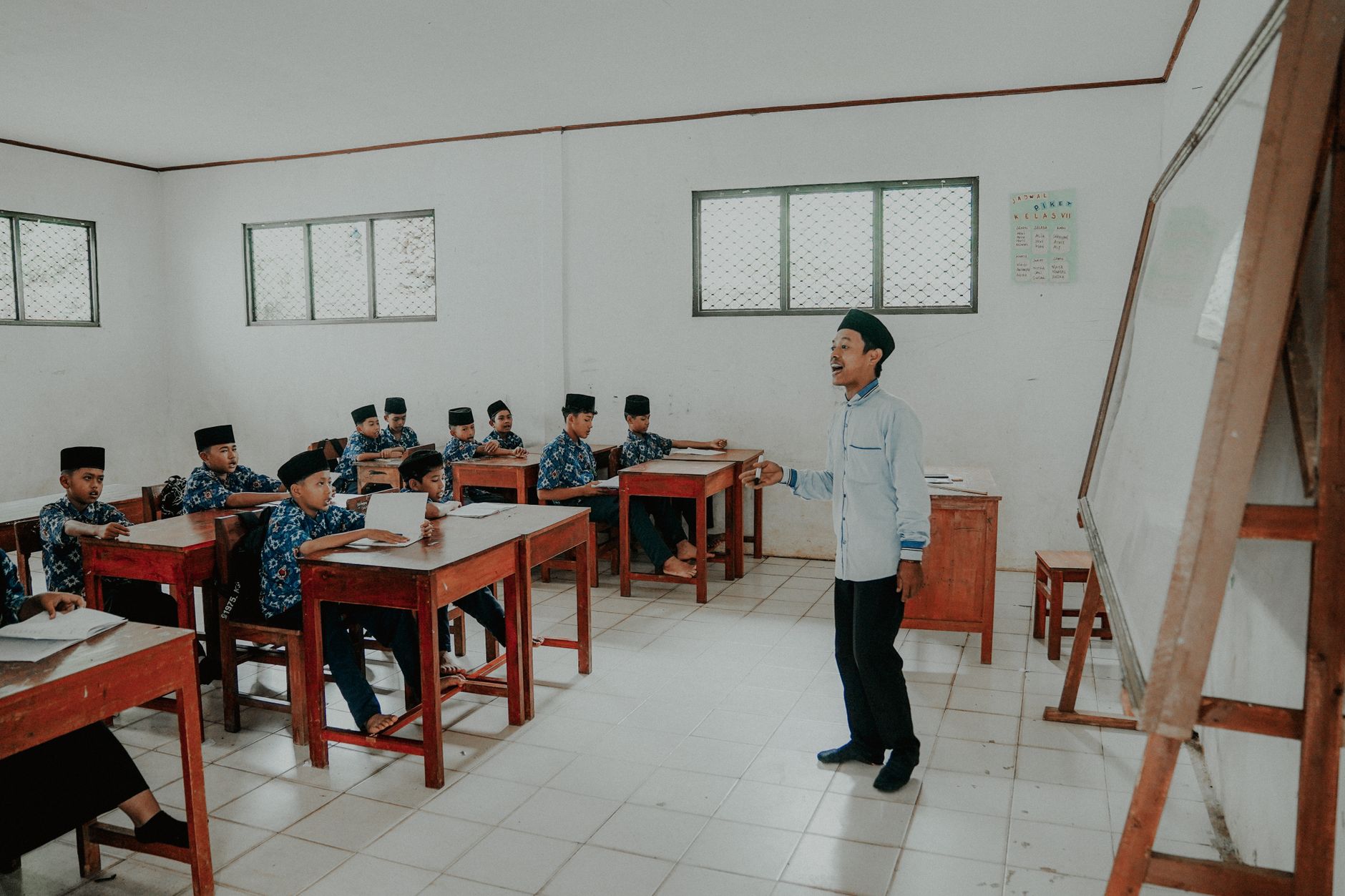
In the annals of Islamic intellectual history, few figures shine as brightly and influentially as Abu Hamid al-Ghazali. Hailed as Hujjat al-Islam (Proof of Islam), Al-Ghazali's profound contributions spanned theology, philosophy, Sufism, and jurisprudence. Yet, his insights into education, often overlooked in mainstream discourse, offer a comprehensive and remarkably prescient framework that remains acutely relevant today. This article delves into Imam Al-Ghazali's Educational Philosophy: Timeless Wisdom for Modern Islamic Teaching, exploring his holistic vision that prioritizes moral purification, spiritual growth, and the integration of knowledge.
Al-Ghazali's Vision of Knowledge (Al-Ilm)
For Al-Ghazali, knowledge (ilm) was not merely the accumulation of facts but a transformative journey. He meticulously categorized knowledge into praiseworthy and blameworthy. Praiseworthy knowledge elevates the soul, leading to a deeper understanding of Allah (SWT) and His creation, fostering humility and righteous action. Blameworthy knowledge, conversely, is that which leads to arrogance, worldly attachment, or proves useless in one's ultimate spiritual journey. He stressed that the true purpose of seeking knowledge is to purify the heart (tazkiyat al-nafs) and to attain proximity to the Divine. This emphasis on intention and spiritual outcomes is a cornerstone of his educational thought. To truly benefit from knowledge, one must first establish a strong foundation in the primary sources of Islamic guidance, such as the Quran, understanding its verses and their profound implications for life.
The Purpose of Education
Al-Ghazali’s educational philosophy is fundamentally teleological, aimed at the ultimate salvation of the individual. He believed education must cultivate:
- Moral Excellence (Akhlaq): Instilling virtues like honesty, compassion, justice, patience, and gratitude. Education, for him, was primarily character formation.
- Spiritual Enlightenment: Guiding the student towards self-awareness, recognizing their purpose in life, and fostering a deep connection with Allah. This includes regular spiritual practices and contemplation. Knowing one's Prayer Times is a foundational step in building this spiritual discipline.
- Practical Wisdom: Equipping individuals with the knowledge and skills necessary to navigate worldly life ethically and contribute positively to society. This includes understanding the practical injunctions of Islam, such as calculating Zakat to fulfill communal obligations.
He firmly rejected education solely for worldly gain, fame, or disputation, seeing these as detractions from the true purpose.
Curriculum & Pedagogy
Al-Ghazali advocated for a balanced curriculum that integrated both revealed (naqli) and rational (aqli) sciences, albeit with a clear hierarchy and purpose.
Foundational Sciences:
He emphasized starting with core Islamic sciences:
- Quranic Studies: Memorization, recitation (tajwid), and deep contemplation (tafsir) of the Quran.
- Hadith: Understanding the Sunnah of the Prophet Muhammad (PBUH) as practical guidance.
- Fiqh (Islamic Jurisprudence): Learning the practical rulings of Islam, essential for daily life. This includes understanding intricate aspects like Islamic inheritance laws, which require careful calculation and adherence to divine principles.
- Aqidah (Theology): Firming up belief in Allah and His attributes.
Integration of Rational Sciences:
While critical of philosophy in his earlier works, Al-Ghazali later recognized the value of rational sciences (mathematics, logic, medicine, astronomy) when pursued with correct intention and within an Islamic ethical framework. He believed these sciences could strengthen faith and serve humanity, provided they didn't lead to atheism or undermine religious truths.
Pedagogical Principles:
His methodology stressed:
- Gradual Learning: Introducing concepts progressively, from simple to complex.
- Understanding over Rote: Prioritizing comprehension and critical thinking over mere memorization.
- Active Engagement: Encouraging students to question, discuss, and apply their knowledge.
- Individualized Approach: Recognizing and catering to the unique capabilities and learning styles of each student.
- Moral Exemplar: The teacher’s character is paramount, embodying the virtues they seek to instill. When travelling, knowing the Qibla direction helps maintain prayer discipline, illustrating a practical application of foundational Islamic knowledge.
The Role of the Teacher (Mu'allim)
Al-Ghazali viewed the teacher as a spiritual parent, a guide (murshid), and a healer of souls. The ideal teacher must possess:
- Profound Knowledge: Not just theoretical but practical and experiential knowledge.
- Impeccable Character: A living example of Islamic ethics and virtues.
- Compassion and Patience: Understanding the student's struggles and guiding them with kindness.
- Sincerity (Ikhlas): Teaching for the sake of Allah, not for worldly acclaim.
- Diagnostic Ability: Discernment to understand each student's temperament, strengths, and weaknesses.
He warned against teachers who teach for worldly gain or ego, as their knowledge would be devoid of blessings (barakah).
Timeless Wisdom for Modern Islamic Teaching
The principles embedded in Imam Al-Ghazali's Educational Philosophy offer profound solutions to many dilemmas faced by modern Islamic education.
Addressing the Crisis of Meaning:
In an era often characterized by nihilism and spiritual emptiness, Al-Ghazali’s emphasis on purpose-driven education, centered on knowing Allah and self-purification, provides a powerful antidote. It redirects focus from purely material success to holistic well-being and spiritual fulfillment.
Holistic Development:
Modern education often compartmentalizes learning, separating academics from character. Al-Ghazali’s model champions an integrated approach, where intellectual pursuit is inextricably linked with moral development and spiritual growth. This means fostering not just cognitive abilities but also emotional intelligence, ethical reasoning, and a strong sense of social responsibility.
Balancing Tradition and Modernity:
His nuanced approach to integrating rational sciences within an Islamic framework offers a blueprint for contemporary Islamic institutions struggling to balance adherence to tradition with the demands of modern scientific advancement. The key lies in maintaining the ethical and spiritual compass provided by revelation while engaging critically with secular knowledge.
Fostering Critical Thinking and Reflective Practice:
Beyond rote learning, Al-Ghazali encouraged deep understanding and introspection. This resonates with modern calls for critical thinking, problem-solving, and reflective practice, ensuring that students can apply Islamic principles to new challenges rather than simply memorizing rules.
The Ethical Imperative:
Perhaps most crucially, Al-Ghazali reminds us that education without ethics is blind. His philosophy serves as a vital reminder that the ultimate goal of learning is to produce individuals who are not only knowledgeable but also virtuous, compassionate, and committed to justice and truth, striving to live in accordance with their faith in every aspect of life, from their personal devotions to their interactions with society, understanding the proper Qibla direction for prayer or how to correctly calculate their Zakat obligations.
Table: Ghazalian Principles vs. Modern Educational Challenges
| Ghazalian Principle | Modern Educational Challenge Addressed |
|---|---|
| Holistic development (body, mind, soul) | Over-emphasis on academic metrics, neglect of character. |
| Knowledge for Allah's sake (Ikhlas) | Education purely for careerism, material gain. |
| Moral purification (Tazkiyah) | Rising rates of unethical behavior, spiritual emptiness. |
| Teacher as spiritual guide | Teachers as mere content deliverers, lack of mentorship. |
| Integration of sciences with ethics | Compartmentalization of knowledge, ethical dilemmas in science. |
Conclusion
Imam Al-Ghazali's Educational Philosophy is not a relic of the past but a vibrant, living tradition offering profound insights for shaping future generations. His emphasis on intention, moral development, spiritual purification, and the integrated pursuit of knowledge provides a comprehensive blueprint for modern Islamic teaching. By embracing his timeless wisdom, we can cultivate individuals who are not only intellectually astute but also spiritually grounded, ethically upright, and capable of contributing meaningfully to both their communities and humanity at large, guided by the light of Islam.
Expertly curated by the Muslim Tools team
© 2026 Muslim Tools. All rights reserved.