Women's Fiqh of Purity: Navigating Hayd (Menstruation) and Nifas (Post-Natal Bleeding) in Worship
Introduction: The Sanctity of Purity (Taharah) in Islam for Women
In Islam, purity (Taharah) transcends mere physical cleanliness; it is a profound spiritual state, an essential prerequisite for drawing closer to Allah and engaging in acts of worship. For Muslim women, understanding the intricate fiqh (jurisprudence) related to their unique physiological states—namely Hayd (menstruation) and Nifas (post-natal bleeding)—is not just important, but paramount. These are periods of significant spiritual implications, and knowing their rulings ensures that worship is performed correctly, accepted, and that women feel confident and empowered in their spiritual lives. This comprehensive guide, crafted with the depth of an expert Islamic writer, aims to demystify these rulings, offering clear, authoritative insights that align with the compassionate spirit of Islamic law.
Understanding Hayd (Menstruation): The Monthly Cycle and Its Rulings
Hayd, or menstruation, is a natural, cyclical bleeding from the uterus that healthy, non-pregnant, and non-nursing women of childbearing age experience. Islam acknowledges this innate biological process with specific, merciful rulings designed to ease women's burdens while upholding the sanctity of worship. Correctly distinguishing Hayd from other types of bleeding (such as Istihada) is foundational for proper practice.
Characteristics and Duration of Hayd
- Definition: The blood that typically flows from a woman's uterus at specific, regular intervals, signifying a state of major ritual impurity (janabah). It is not caused by illness, injury, or pregnancy.
- Color & Consistency: Often dark red, black, or brownish, typically thicker than other types of vaginal discharge.
- Minimum Duration: The generally accepted minimum duration for Hayd is 24 hours. Bleeding for less than this is typically considered Istihada.
- Maximum Duration: Scholars have various opinions on the maximum. The Hanafi school generally states 10 days, while the Shafi'i, Maliki, and Hanbali schools generally hold 15 days. Bleeding exceeding these established maximums is usually considered Istihada.
- Customary Cycle: Each woman should know her customary cycle length and pattern, as this helps in discerning Hayd from Istihada.
Acts of Worship Prohibited During Hayd
During Hayd, a woman is considered to be in a state of major ritual impurity, which temporarily exempts her from certain acts of worship as a mercy from Allah:
- Salah (Prayer): A woman in Hayd is prohibited from performing the five daily prayers. This exemption is a divine mercy, and importantly, she is not required to make up these missed prayers once her period ends. For those preparing to resume their prayers and to ensure accurate worship, understanding the correct Prayer Times is essential.
- Sawm (Fasting): Fasting is prohibited during Hayd, whether it be obligatory (like Ramadan) or voluntary. However, unlike Salah, women are required to make up missed obligatory fasts on other pure days of the year, before the next Ramadan.
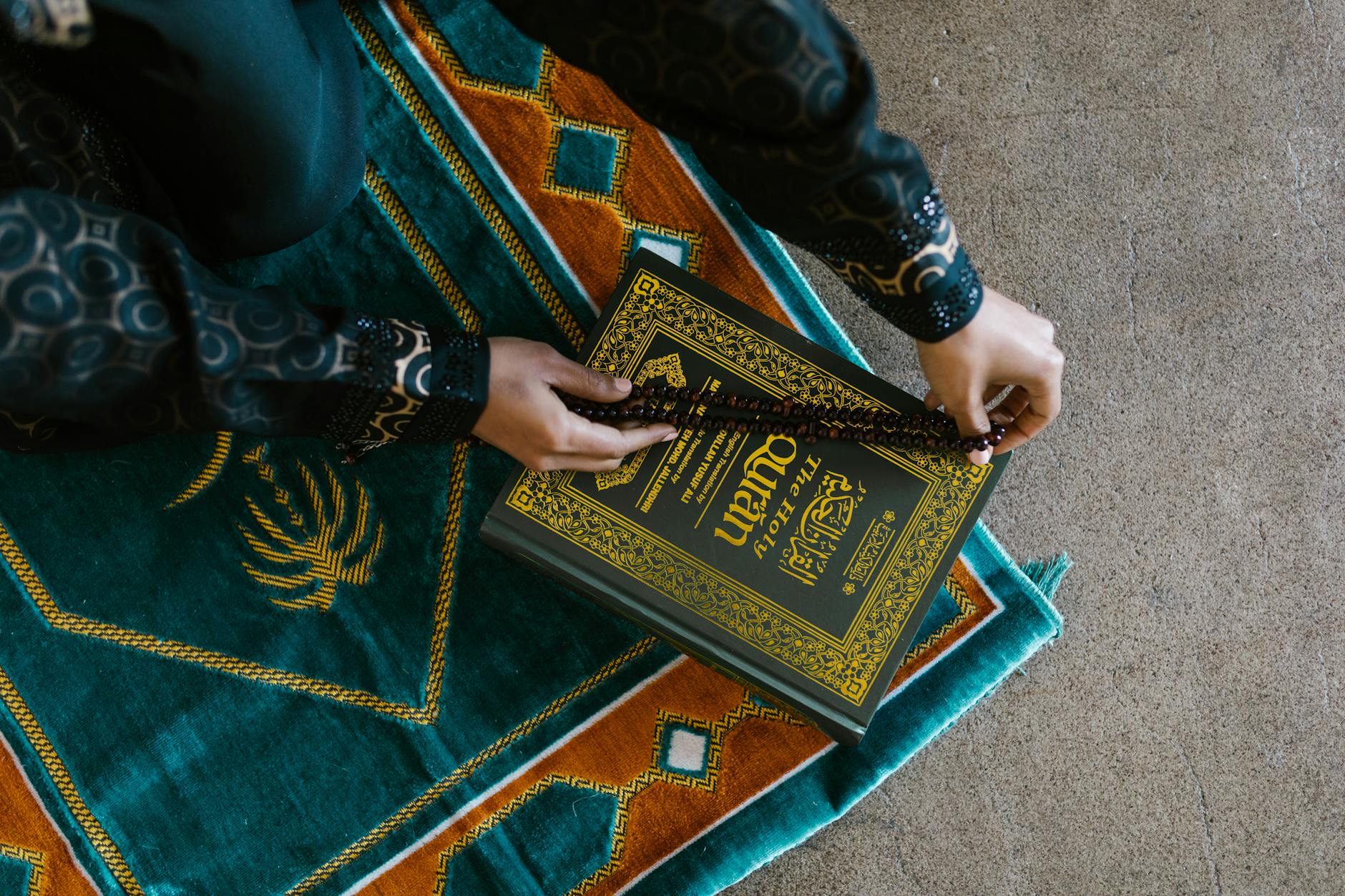
- Touching the Mushaf (Quran) and Recitation: The majority of scholars prohibit touching the physical copy of the Quran (Mushaf) without ghusl. Recitation from memory without touching the Mushaf is generally permissible. We encourage all sisters to continue engaging with the divine message by listening to the Quran, making dhikr, and seeking Islamic knowledge.
- Tawaf (Circumambulation of the Ka'bah): Performing Tawaf around the Ka'bah during Hajj or Umrah is prohibited.
- Sexual Intercourse: Engaging in sexual intercourse with her husband is strictly prohibited during Hayd.
- Entering a Mosque for Residence (Itikaf): There are differing scholarly opinions on merely entering a mosque, but most agree it is impermissible to reside for Itikaf (spiritual seclusion).
Permissible Acts of Worship During Hayd
While certain acts are temporarily suspended, a woman in Hayd can still engage in numerous forms of worship and gain immense reward:
- Dhikr (Remembrance of Allah): Glorifying Allah, saying 'SubhanAllah', 'Alhamdulillah', 'Allahu Akbar', 'La ilaha illa Allah', and other invocations.
- Dua (Supplication): Making heartfelt prayers and asking Allah for her needs, aspirations, and forgiveness. This is a constant open channel to Allah.
- Listening to the Quran: Actively listening to recitations of the Quran, reflecting on its meanings, and memorizing it from recordings.
- Seeking Knowledge: Reading Islamic books, attending lectures, studying fiqh, tafsir, hadith, and other Islamic sciences.
- Giving Charity (Sadaqah): Acts of benevolence, including financial charity, are highly encouraged. You can learn more about purifying your wealth and fulfilling this obligation with a Zakat Calculator.
- Maintaining Family Ties & Good Deeds: Serving parents, caring for children, upholding familial duties, helping others, and general acts of kindness are all highly rewarded forms of worship.
Ghusl (Ritual Bath) After Hayd
Upon the cessation of Hayd, a woman must perform Ghusl (the ritual full-body bath) to purify herself before resuming prayers, fasting, and other acts requiring ritual purity. The signs of cessation are typically one of two:
- The Emission of a White Discharge (al-qassah al-bayda'): A clear or white discharge that indicates the complete end of bleeding.
- Complete Dryness: If a white cloth or tissue inserted into the vaginal area comes out completely clean, with no trace of blood or brownish discharge.
Once purity is confirmed, perform Ghusl by making the intention (niyyah) to purify from Hayd, washing the entire body thoroughly, ensuring water reaches all parts, including the scalp and roots of the hair, and rinsing the mouth and nose.
Understanding Nifas (Post-Natal Bleeding): Purity After Childbirth
Nifas is the bleeding a woman experiences after childbirth or a miscarriage where a formed fetus is expelled. Its rulings are largely similar to Hayd, given that both states signify a period of recovery and temporary ritual impurity.
Characteristics and Duration of Nifas
- Definition: Blood that exits the uterus due to childbirth, from the moment of birth until the bleeding stops.
- Duration: There is no minimum duration for Nifas; it can stop immediately after birth. The maximum duration, according to the majority of scholars, is 40 days. If bleeding continues beyond 40 days, it is generally considered Istihada, unless it aligns with her Hayd cycle.
Rulings During Nifas
The prohibitions and permissions during Nifas are identical to those during Hayd. A woman in Nifas is prohibited from:
- Prayer (Salah) – No make-up required.
- Fasting (Sawm) – Make-up required.
- Touching the Mushaf and Recitation (with similar exceptions as Hayd).
- Tawaf.
- Sexual Intercourse.
- Entering a Mosque for residence.
She can engage in all other forms of worship such as Dhikr, Dua, listening to Quran, seeking knowledge, and giving charity. Preparing for the resumption of Salah after Nifas also includes knowing the correct direction of prayer, which can be easily found using a Qibla Finder.
Ghusl After Nifas
Once Nifas bleeding ceases, even if it's before the 40-day maximum, the woman must perform Ghusl to regain ritual purity. The method of Ghusl is exactly the same as after Hayd.
Distinguishing from Istihada (Irregular Bleeding)
Istihada is any uterine bleeding that is not Hayd or Nifas. It could be bleeding outside the typical duration of Hayd or Nifas, continuous bleeding for an extended period, or irregular bleeding due to illness or hormonal changes. Understanding this distinction is vital, as a woman in Istihada is considered ritually pure for worship and is not subject to the prohibitions of Hayd or Nifas.
Rulings for Istihada
- A woman experiencing Istihada is considered ritually pure.
- She must perform Wudu (ablution) for each prayer time after its entry, even if she bled during the Wudu or prayer itself. This Wudu remains valid for the duration of that prayer time.
- She can pray, fast, touch the Quran, perform Tawaf, and engage in all other acts of worship.
- Sexual intercourse is permissible.
If you're unsure about the type of bleeding, especially in complex cases, consulting a knowledgeable Islamic scholar or a trusted female Islamic expert is always recommended. This emphasis on seeking knowledge extends to understanding all aspects of a Muslim's life, including matters of family and communal well-being, such as how to calculate shares justly using an Inheritance Calculator, ensuring justice and purity in all dealings.
Navigating Uncertainty and Seeking Guidance
The fiqh of purity can sometimes appear complex, especially with individual variations in women's cycles. Here are some practical guidelines:
- Know Your Customary Cycle: Keep a record of your usual Hayd duration and pattern. This personal knowledge is your primary reference point for distinguishing it from Istihada.
- Observe the Signs of Purity: Diligently check for the white discharge (al-qassah al-bayda') or complete dryness to confirm the unequivocal end of Hayd or Nifas.
- Consult Scholars: When in doubt, or facing unusual circumstances, seek advice from reliable female scholars or knowledgeable experts who can provide personalized guidance based on your specific situation and relevant Islamic jurisprudence.
- Embrace Allah's Mercy: Always remember that Islam is a religion of ease and compassion. The temporary exemptions during Hayd and Nifas are not a punishment but a profound mercy and wisdom from Allah, allowing women recovery and spiritual ease.
Conclusion: Embracing Purity and Wisdom in Worship
Understanding and diligently applying the fiqh of Hayd and Nifas is an integral and empowering part of a Muslim woman's spiritual journey. It stands as a testament to Islam's comprehensive nature, meticulously acknowledging women's physiological realities while simultaneously providing clear, compassionate pathways to maintain and strengthen their connection with Allah. By meticulously observing these rulings, embracing the wisdom behind their exemptions, and diligently pursuing knowledge, women can navigate their periods of purity and impurity with unwavering confidence, ensuring their worship is valid, their hearts remain steadfast in faith, and their spiritual growth continues uninterrupted. May Allah grant us all a deeper understanding of His beautiful deen and the strength to live by its pure teachings.
Expertly curated by the Muslim Tools team
© 2026 Muslim Tools. All rights reserved.